
Understand your chart
BOS vs CHoCH: read structure at the right scale
Learn how a break of structure differs from a change of character, with an example separating internal structure from swing structure.
BOS means break of structure. CHoCH means change of character. In Core, these labels classify a break relative to the direction already tracked by that structure module. BOS describes a break in the tracked direction; CHoCH describes a break against it. Neither label guarantees what price will do next.
First identify the structure scale#
Core separates internal structure from swing structure. Internal structure follows shorter movements. Swing structure tracks a broader set of turning points. Both can be visible at once, so a small counter-move can change internal direction while the swing direction remains unchanged.
Open settings and inspect Show Internal Structure and Show Swing Structure. The bullish and bearish filters can show All, BOS, or CHoCH. If one label type seems absent, check those filters before concluding that detection failed.
A hypothetical sequence#
Suppose a structure module is tracking a bullish direction with a recognized high at 110 and a recognized higher low at 104. A close crossing above 110 on the move to a new high of 113 can receive a bullish BOS label because the break agrees with that module's prior direction.
If price later closes at 102, below the tracked low of 104, while that module still has bullish bias, the break can receive a bearish CHoCH label. It records a change in the tracked structure. It does not prove the beginning of a lasting downtrend.
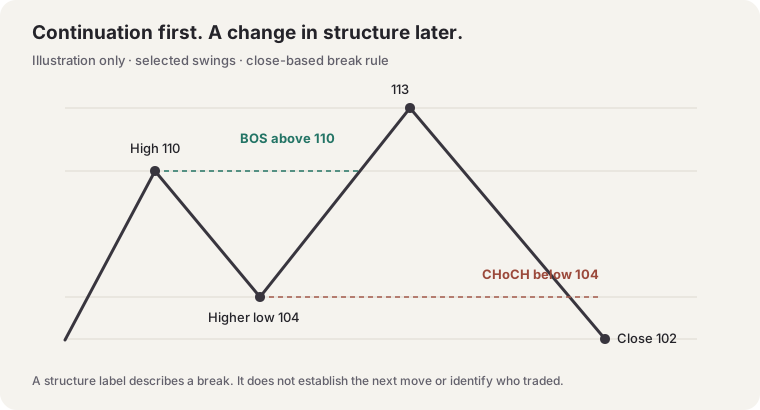
The exact labels depend on which pivots the module has recognized at that time. A hand-drawn high at 110 may not be the active pivot used by the indicator. This illustration explains classification with invented prices; it is not a live chart, backtest, or exact replay of a Core signal.
A wick is not the whole comparison#
Core's structure-break checks use a crossing of the price close series against the tracked level. On an open candle, that close value is the current price and can still move. A price briefly moving beyond a level during the bar does not prove the same break will remain at its final close.
To review a disputed label, note the level, the bar's timestamp, and whether your observation happened before or after closing. Do not compare an intrabar screenshot with a historical chart as if both contain the same information.
Why a label can sit behind the latest candle#
A structure drawing connects the recognized pivot with the break. Its text can appear between those points. The position of the label is not necessarily the time when the event first became knowable. Pivot recognition itself also requires subsequent price information.
For evaluation, record the detection or alert time, not just the bar underneath the text. The confirmation guide explains this timing distinction.
Read conflicting labels literally#
An internal bearish CHoCH alongside bullish swing structure says the shorter scale changed while the broader scale has not made the same change. It is useful descriptive information, not a software contradiction and not an instruction to trade. Continue with order blocks to understand the zones that can accompany structure events, or use the glossary for terminology.